THE
CONSORTIUM
GRADUATE
ALIGNING THE PRACTICES AND OUTCOMES OF CONSORTIUM SCHOOLS TO THE NEW YORK STATE PORTRAIT OF A GRADUATE
For more than 25 years, the New York Performance Standards Consortium has been graduating students with the essential skills and dispositions to be successful in college, careers, and civic life—aligned with the vision New York State describes in its Portrait of a Graduate. The Consortium’s 38 schools operate under a variance that allows students to demonstrate their learning through authentic alternatives to the Regents exams. With this freedom to innovate, we’ve built a fundamentally different model of education—one that prioritizes in-depth inquiry, reasoning with evidence, communication of ideas, and real-world application of knowledge across diverse communities. These capacities show up in every classroom, across schools serving students of every background. Below, we show what this looks like, in the words of Consortium students, families, and educators.
DOWNLOAD THE CONSORTIUM GRADUATE PDF
Academically Prepared
Performance assessments require in-depth analysis and non-routine problem solving
Dual enrollment college courses build confidence and skills
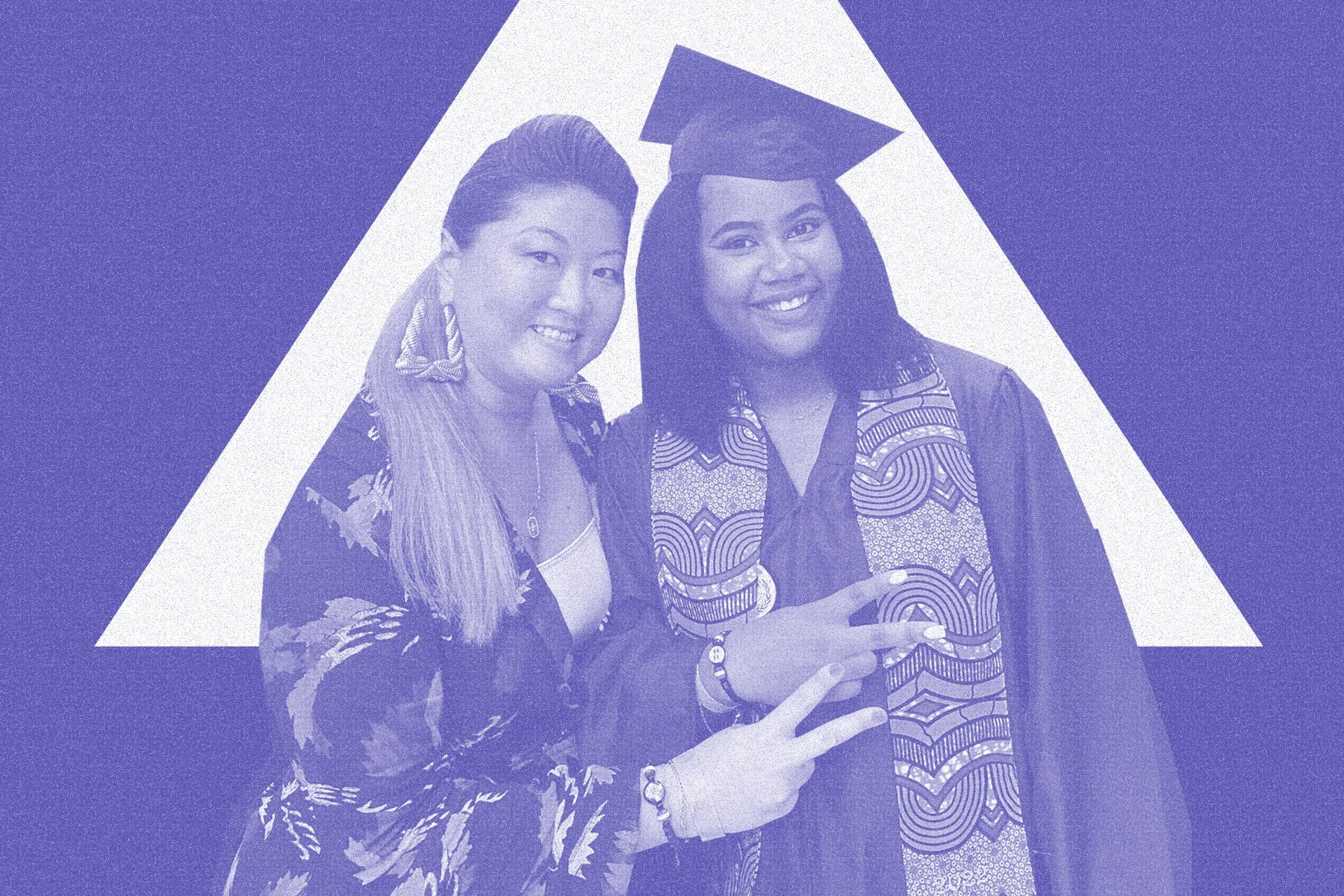
“My friends at Baruch can’t seem to recall anything they learned in high school. They would memorize things for exams, but I wanted to understand. I was taught that my opinion and my perspective matter. That helps create a different mentality that you’re going into college with.” – Ramgelly, Graduate, The Laboratory School of Finance and Technology; Graduate, Baruch College (CUNY)
“In my past experience with math, the equations were given to me and I was mindlessly plugging in numbers. You don’t have a full understanding nor can you explain it well. But, because of how math was taught at Humanities Prep, I now understand why certain things work and others cannot, and that math is logical thinking backed by numbers.” – Eliel, Graduate, Humanities Preparatory Academy; Student, Baruch College (CUNY)
Effective Communicator
Extensive reading and writing builds habits of complex expression
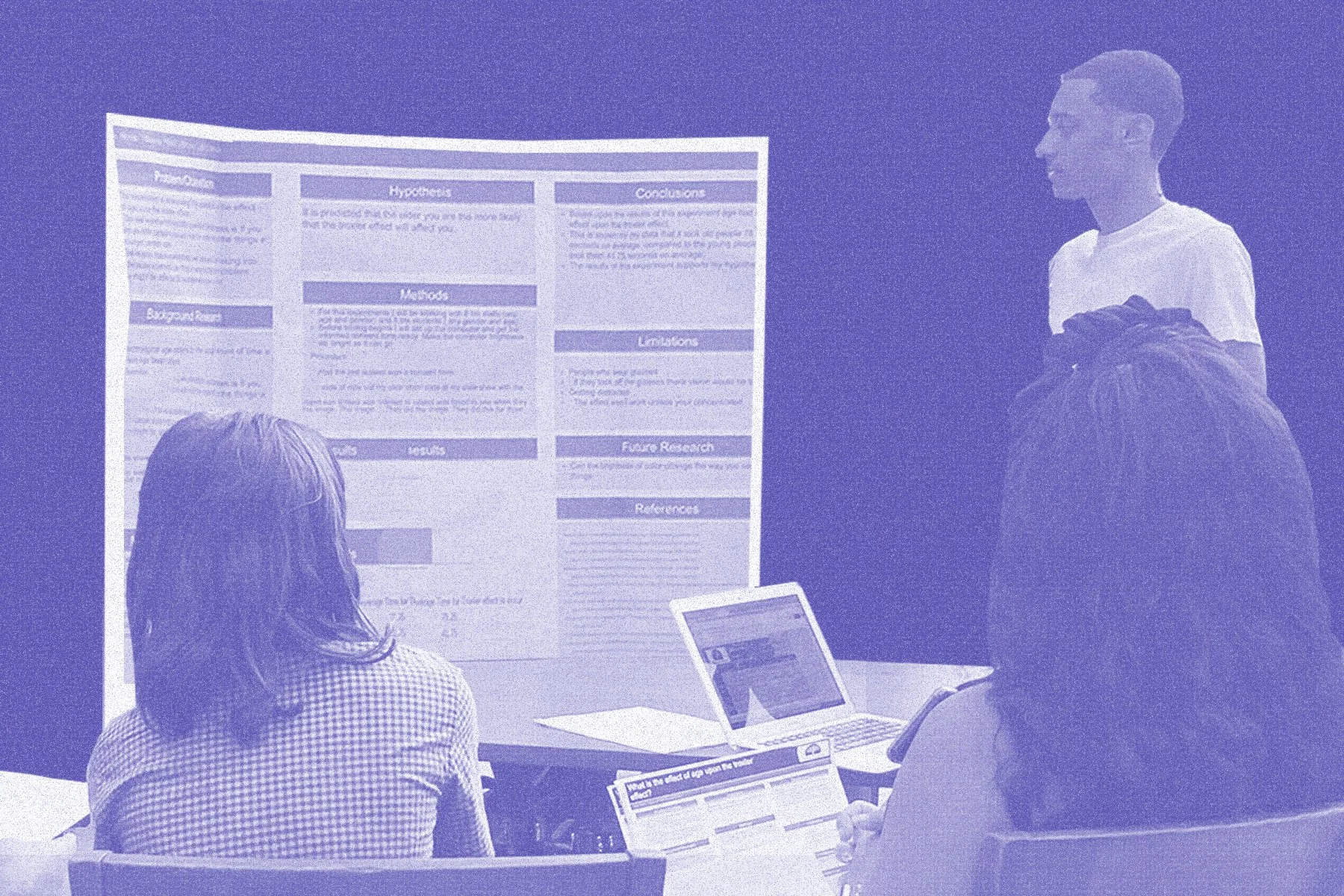
Oral defenses presented to outside evaluators prepare students for college and the workforce
“My son gained invaluable critical thinking and presentation skills that have proven even more essential beyond high school. Now in college at Tulane University, he often shares how the foundation he received gave him the confidence and skills to excel in areas in which many of his peers who attended more traditional schools seem to struggle.” – Valentina, Parent, Institute for Collaborative Education Graduate
“PBAT (Performance Based Assessment Task) require you to research, formulate a complex claim, and defend it, both through a paper and a presentation. You need to be able to think on the spot. It’s really preparing me for the college process and for the work once I get there.” – Levi, Student, School of the Future High School

Reflective & Future Focused
Community service and internships connect learning to real-world contexts
Feedback and revision build self-awareness and resilience
Advisory supports student and community wellbeing
“I take an ASL class and I have learned to communicate with the deaf community in our school. I’m hard of hearing and this has impacted me because I have been able to communicate with people my age, who had different experiences, but also similar to me, and who have gone through similar struggles. I have figured out that I want to become a counselor for the deaf and hard of hearing for my career.” – Sofia, Student, Middle College High School
“PBATs are for life!” – Aisha, Faculty and Graduate, International Community High School
Creative Innovator
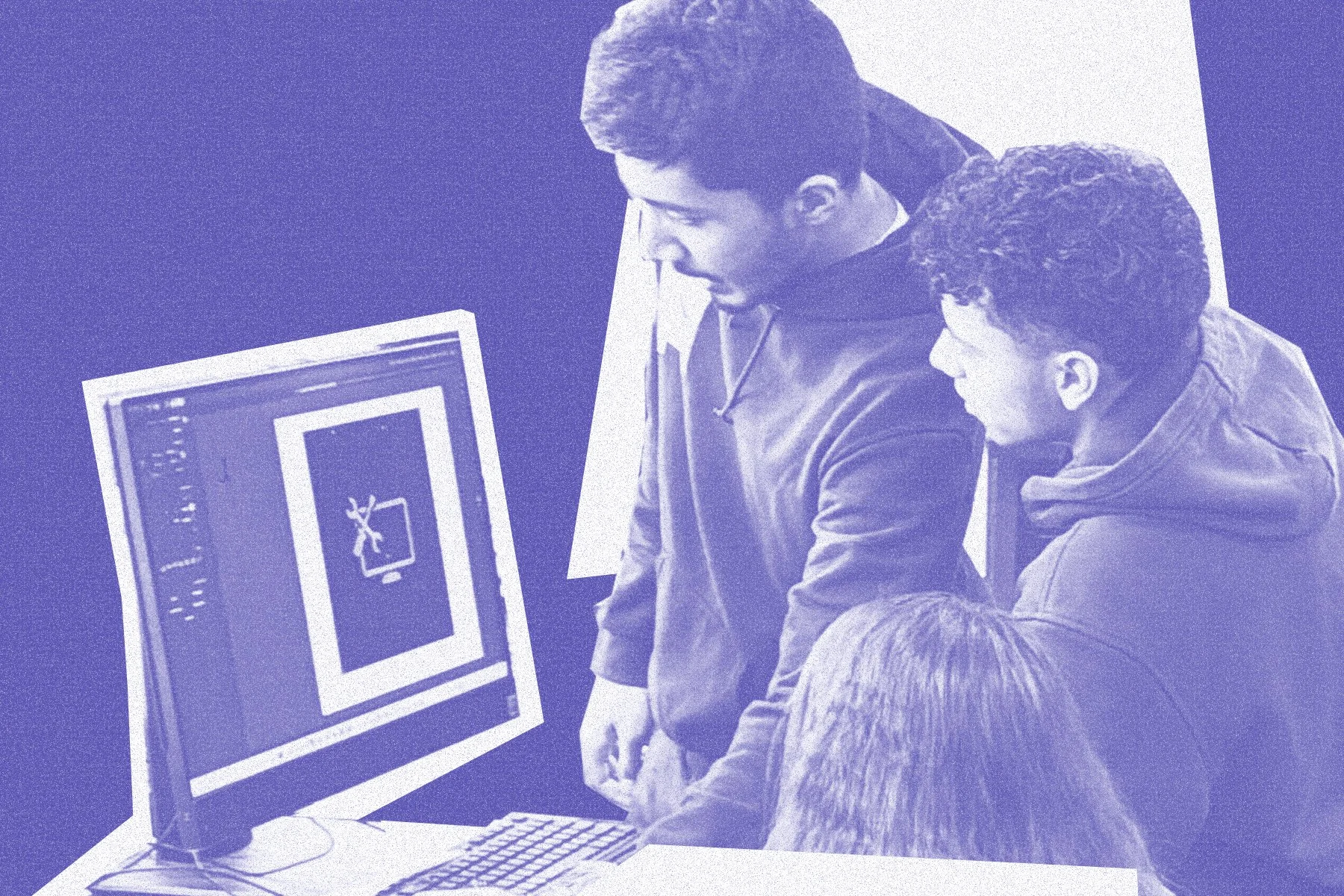
Student-designed experiments and engineering solutions develop creativity and problem-solving skills
Choice of research topics supports student curiosity and builds agency
“PBATs are creative by design. It’s a topic of your choice. You are demonstrating both your knowledge and skills, and your creativity.” – Julian, Student, Lehman Alternative Community School (Ithaca)
“Besides being a mom, I am also an organizational psychologist. The research shows that the most resilient leaders have learned how to learn and are curious about the world around them. My child is being taught and encouraged to develop these essential skills by being able to choose the topics he can research and explore.” – Kim, Parent, Brooklyn Collaborative

Critical Thinker
Inquiry curriculum supports making meaning from complex and divergent perspectives
Students form and defend their own positions through discussion and evidence-based writing
“My African American Literature class made me realize I actually like thinking. I just needed something worth thinking about.” – Xavier, Student, School Without Walls (Rochester)
“I think true critical thinking is when you can truly look at something and say, ‘I can form my own opinion about that, and this is my stand, and this is my evidence.’ So I actually get excited whenever I have to write papers at Babson because I get to show my opinion!” – Keisha, Graduate, Fannie Lou Hamer Freedom High School; Posse Scholar, Babson College

Global Citizen
Curriculum that encourages intellectual curiosity and ethical deliberation about contemporary issues
Opportunities for student voice in school courses, curriculum and policies
“My son’s class topics (The History of Haiti & the Dominican Republic, Civil War & Reconstruction, and Malcolm X, to name a few) were varied, engaging and specific, going deep instead of broad. The discussions were fascinating and enriched our family’s dinnertime conversations! The student population was diverse–academically, racially, ethnically, and socioeconomically–so students engaged in a meaningful way with kids from other backgrounds.” – Meema, Parent, Urban Academy Graduate and Current Oberlin College Student
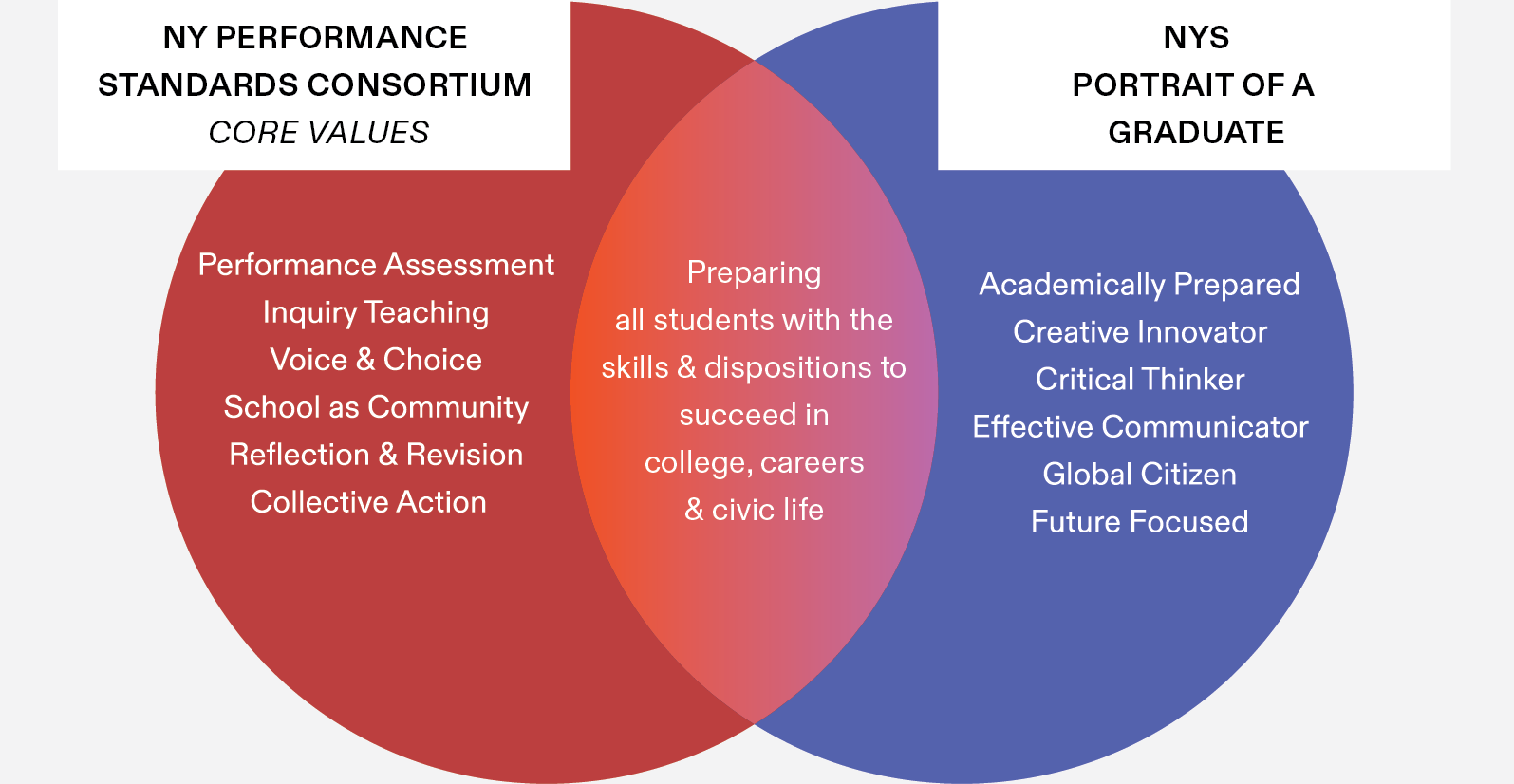
For more than 25 years, the Core Values of the New York Performance Standards Consortium provide a unified foundation through which students develop the skills and competencies described in New York State’s Portrait of a Graduate.
DOWNLOAD THE CONSORTIUM GRADUATE PDF